Round Wood Fence Posts: How to Choose the Right One for Your Fence
If you've spent any time shopping for fence materials, you've probably noticed that posts come in two basic shapes: round and square. The choice feels minor until you're standing in the lumber yard trying to figure out which one actually belongs in your project. Round wood fence posts have been the default for working farms and rural properties for generations, and there are good reasons they've stuck around. This piece covers how round posts compare to square ones and what to think about before you drive your first post into the ground.
Round vs. Square Fence Posts: What the Difference Actually Means
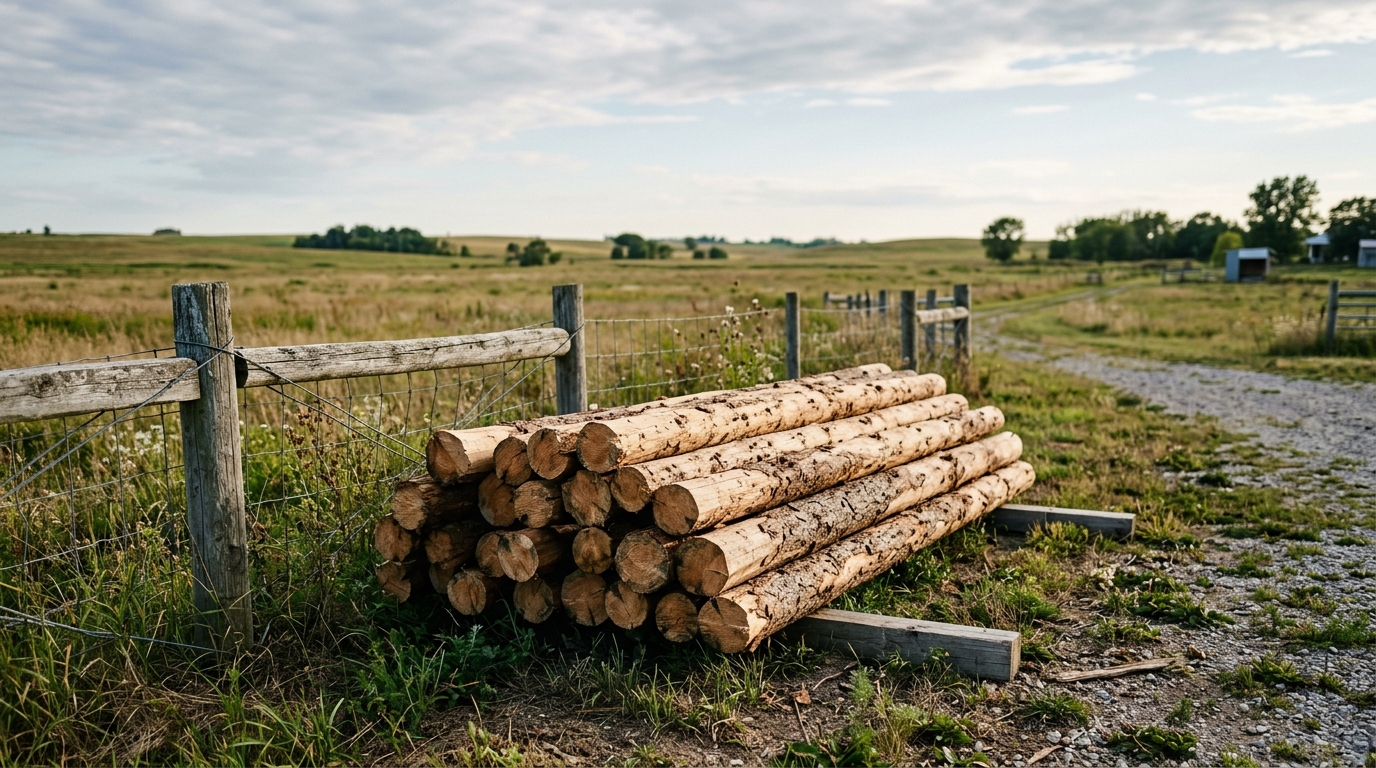
Round posts are cut directly from the log, which means the outer wood fibers, the densest and most rot-resistant part of the tree, stay intact. Square posts are milled, so those outer layers get planed away. For treated lumber fence posts, that distinction matters less because the preservative treatment does a lot of the protective work regardless of shape. But for anyone using untreated or minimally treated material, a round post typically holds up better in the ground over time.
There's also a practical handling difference. Round posts drive cleaner. If you're running a Montana post driver or any hydraulic post pounder down the line, a round post centers itself naturally in the driver cup and takes the impact evenly. Square posts can twist or split at the top if the driver doesn't land perfectly square. For large fencing jobs, that's not a small thing.
Where Round Posts Make the Most Sense
Split-rail fences are the obvious application. The rails slot into drilled holes in the post, and a round post gives you a symmetrical hole at any angle. That's harder to achieve cleanly with a square post. For a classic two- or three-rail split-rail look, round posts are the standard choice.
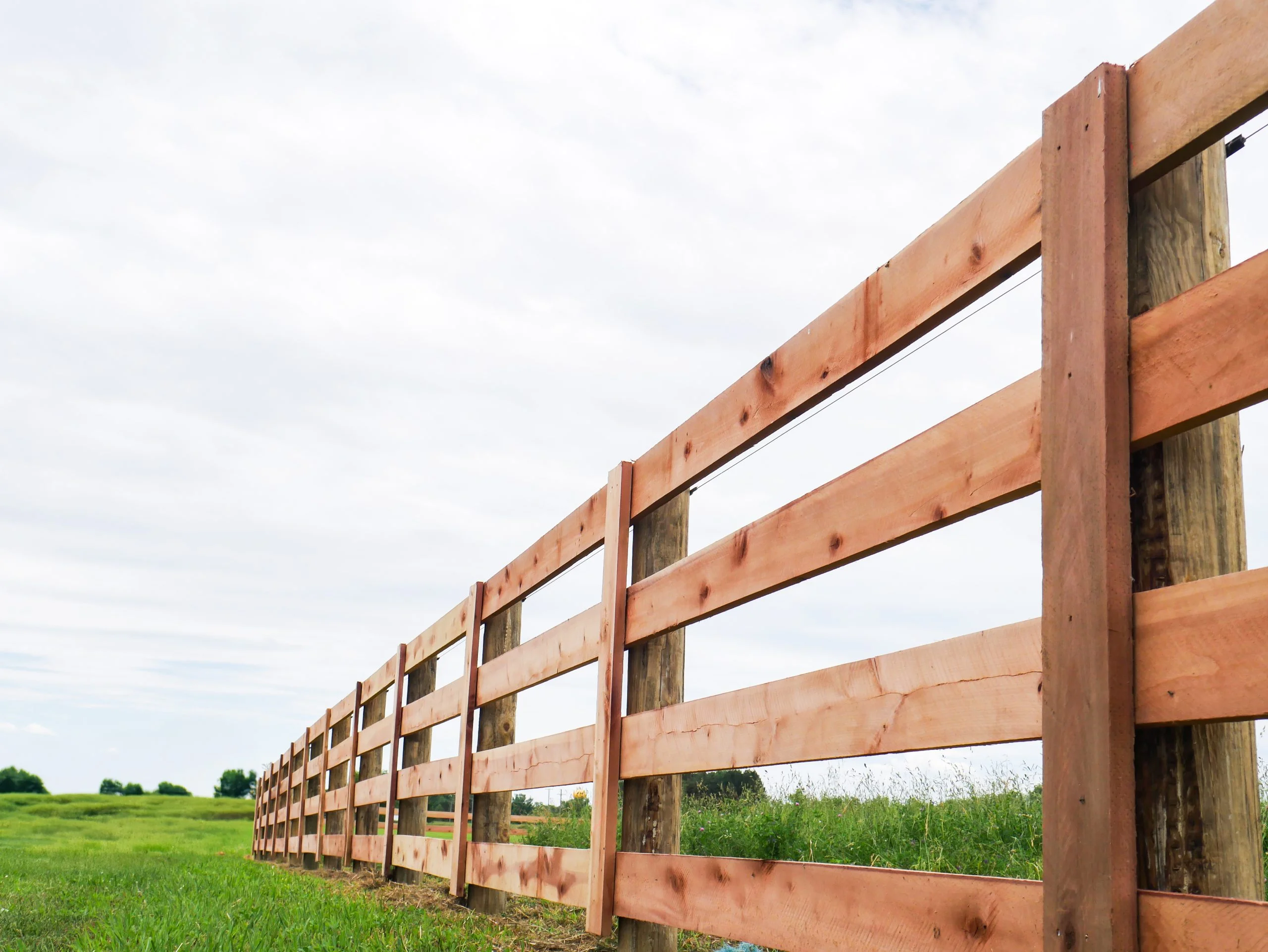
Pasture and livestock fencing is another strong fit. Farms running board fence across large acreage tend to favor round posts because they're faster to set with a tractor-mounted driver and because the tapered end makes starting a hole easier in harder soil. If you're putting up a board fence for horses or livestock, round posts keep the work moving.
Landscape applications are worth mentioning too. A round landscape post used as a corner anchor or end post on a garden border or paddock edge often looks more natural in a rural or semi-rural setting than a milled square post.
Setting Depth, Species, and Treatment Level
The rule of thumb for post setting depth is one-third of the total post length in the ground, with a minimum of two feet, regardless of post height. A six-foot post goes two feet down. An eight-foot post goes closer to two and a half to three feet. That depth holds in most soil types, though frost heave in colder climates pushes some installers to go deeper on end posts and corner posts that carry more load.
Species matters more than people expect. Cedar and treated pine are the most common choices for fence posts in the northern U.S. Cedar is naturally rot-resistant and handles ground contact reasonably well without additional treatment. Treated pine, using a preservative rated for ground contact (UC4B or UC4C for posts in direct soil contact), gives you more predictable longevity. Suppliers like Valente Lumber stock treated rounds in multiple sizes, so matching the diameter to your rail size or board spacing is usually straightforward.
If you're comparing options beyond fence posts, it's worth knowing that wooden utility poles follow similar species logic, just at a larger scale and with heavier treatment requirements for the loads they carry. You can read more about those applications on our poles and pilings product page.
Buying Round Posts Without Overcomplicating It
Most buyers searching for “round wood fence posts near me” are working on a specific project with a specific post count. Before you order, nail down three things: the diameter you need (common sizes run from three-inch to six-inch for residential and farm fencing), the length based on your fence height plus setting depth, and the treatment level appropriate for your soil conditions and climate.
If you're unsure how many posts a project requires, our post selection guide for Michigan properties walks through spacing math by fence type. For split-rail specifically, spacing tends to run eight to ten feet on center, which makes calculating post count pretty simple once you have your total run.
Legacy Post & Supply carries treated fence posts in round and other profiles, and can quote by the bundle for larger orders. If you're ready to put numbers to your project, request a quote online or reach out to our team with your specs, and we'll get back to you quickly.
Quality You Can Trust
Experience the quality of Legacy Post & Supply products firsthand. Contact us today to discuss how we can help or to request a free quote.